
Goat farming has become one of the most profitable agricultural ventures in Africa and beyond. With the rising demand for goat meat, milk, and skin, farmers are exploring various systems of rearing goats. Two of the most popular methods are intensive and extensive goat farming.
But which is better for you intensive or extensive?
In this blog, we’ll break down both systems, their advantages, disadvantages, and which one suits your goals best.
What Is Intensive Goat Farming?
Intensive goat farming is a system where goats are kept in confinement usually in pens or sheds and fed with processed feed, forage, and supplements. Farmers provide water, feed, and medical care directly to the animals.
This method is often practiced in urban or semi-urban areas where land is limited.
Advantages of Intensive Goat Farming
- Better Growth Rate: Goats gain weight faster because their nutrition is controlled.
- Disease Control: Easier to monitor and treat goats since they stay in one place.
- Efficient Land Use: Ideal for farmers with small land space.
- High Productivity: Suitable for large-scale commercial farming.
- Year-Round Production: Feed is available throughout the year, so goats don’t depend on pasture seasons.
Disadvantages of Intensive Goat Farming
- High Initial Cost: Requires investment in housing, feed, and labor.
- Feed Dependency: Farmers must buy or produce feed constantly.
- Management Skill: Requires good knowledge of goat nutrition and disease control.
- Stress Risk: Limited space can stress goats if overcrowded.
What Is Extensive Goat Farming?
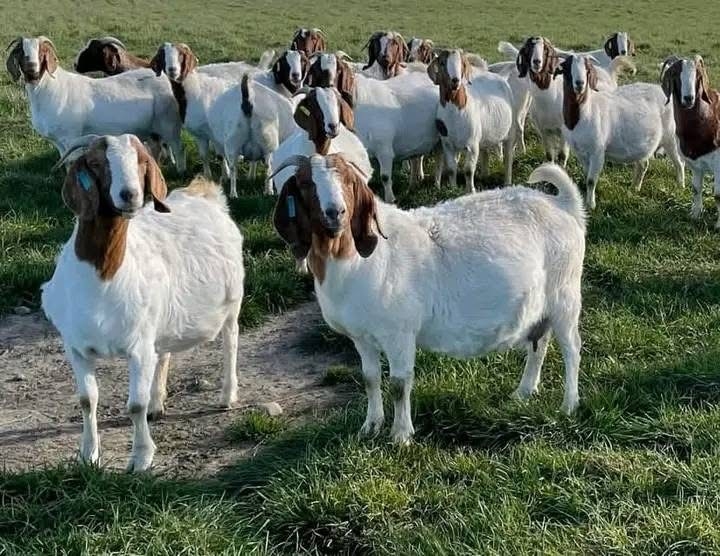
Extensive goat farming is the traditional system where goats graze freely on open land or natural pasture. It’s common in rural areas where there is enough land for goats to roam and feed naturally.
Advantages of Extensive Goat Farming
- Low Cost: Minimal input and no need for expensive housing.
- Natural Feeding: Goats eat grass, shrubs, and leaves — reducing feed cost.
- Healthy Exercise: Movement improves their health and natural immunity.
- Low Labor Requirement: Farmers only need to supervise the herd.
Disadvantages of Extensive Goat Farming
- Uncontrolled Breeding: Hard to manage breeding and track performance.
- Disease Exposure: Goats mix with others and are more prone to infections.
- Seasonal Feeding: Pasture may not be available during dry seasons.
- Predator Risks: Higher risk of theft and attacks from wild animals.
Key Differences Between Intensive and Extensive Goat Farming
| Feature | Intensive Farming | Extensive Farming |
| Land Requirement | Small | Large |
| Feed Source | Processed or cultivated feed | Natural pasture |
| Initial Cost | High | Low |
| Management Need | High | Low |
| Productivity | High | Moderate |
| Disease Risk | Controlled | Higher |
Which Is Better?
Choosing between intensive and extensive goat farming depends on your resources, goals, and environment.
- If you have limited land and want fast growth and high production, intensive farming is the best choice.
- If you have large land space, minimal capital, and prefer a low-cost system, extensive farming may suit you better.
Many successful farmers now use a semi-intensive system combining both methods. Goats graze during the day and return to pens at night. This balance improves health, reduces cost, and increases productivity.
Final Thoughts
Whether you choose intensive or extensive goat farming, success depends on proper management, quality breeding, and consistent care. Start small, learn as you grow, and adopt practices that fit your farm’s conditions.
Goat farming can be a sustainable source of income if handled with the right strategy.